6 Easy Steps to Apply Trace Minerals
The difference between a garden that survives and one that thrives often comes down to micronutrients invisible to the naked eye. Trace minerals, elements required in parts per million rather than pounds per acre, govern enzyme activation, chlorophyll synthesis, and disease resistance mechanisms. Mastering the steps to apply trace minerals transforms soil chemistry from guesswork into precision agriculture. Iron, manganese, zinc, copper, boron, molybdenum, and chlorine operate as catalysts in plant metabolism, and their strategic application corrects deficiencies before symptoms manifest as chlorosis or necrotic spotting.
Materials
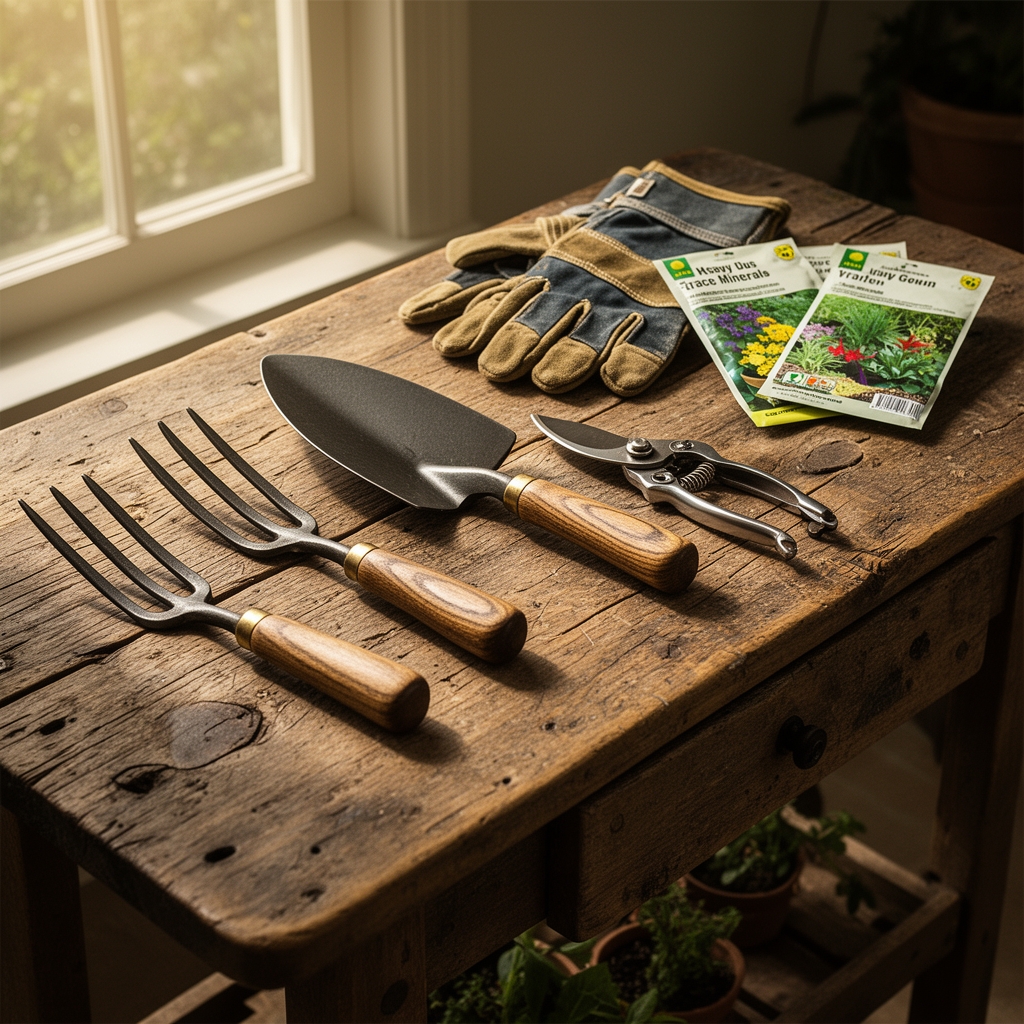
Select amendments based on soil pH and existing cation exchange capacity. For acidic soils (pH 5.0-6.0), use kelp meal (1-0-2 NPK) rich in naturally chelated trace elements and up to 70 micronutrients. Greensand provides slow-release iron, potassium, and magnesium with a 0-0-3 NPK profile suited to pH 6.5-7.5. Azomite, a volcanic mineral powder, delivers broad-spectrum trace minerals including rare earth elements at 0-0-0.2 NPK.
For targeted applications, acquire chelated micronutrient solutions: iron EDDHA for alkaline soils (pH above 7.0), manganese sulfate (MnSO4) at 32 percent elemental manganese, and zinc sulfate (ZnSO4) at 36 percent elemental zinc. Boron should be handled as sodium borate (Solubor) at 20.5 percent boron, applied with extreme caution since toxicity appears above 1 ppm in tissue tests. Copper sulfate pentahydrate at 25 percent elemental copper addresses deficiencies in sandy, high-organic soils where copper binds tightly to humus.
For foliar applications, prepare a surfactant from yucca extract or nonionic spreader-sticker at 0.25 percent concentration to improve stomatal uptake. Always verify product purity through certificates of analysis showing heavy metal contamination below EPA limits (lead under 10 ppm, cadmium under 1.5 ppm).
Timing
Schedule trace mineral applications according to USDA Hardiness Zones and phenological stages. In Zones 3-5, apply granular amendments 4-6 weeks before last frost date when soil temperatures reach 45°F, allowing microbial populations to solubilize minerals before spring planting. Zones 6-8 benefit from split applications: 60 percent in early March, 40 percent in mid-September after harvest.
Zones 9-11 require vigilance during monsoon seasons when leaching removes mobile elements like boron and molybdenum. Apply foliar sprays during vegetative growth when leaf cuticles are most permeable, typically 2-3 hours after sunrise when stomata open but before temperatures exceed 80°F. Avoid application within 7 days of expected frost, as cellular damage increases micronutrient toxicity risk.
For fruiting crops, time zinc and boron applications at pre-bloom, precisely 10-14 days before anthesis when reproductive tissues have maximum sink strength. Manganese foliar sprays prove most effective during rapid cell division phases, identifiable when internodal elongation exceeds 0.5 inches per week.
Phases

Sowing Phase
Broadcast granular trace mineral blends at 2-4 pounds per 100 square feet, incorporating to 4-inch depth using a broadfork to preserve soil structure. For precision seeding, band-apply chelated solutions 2 inches beside and 2 inches below seed furrows at 0.5 gallons per 100 row-feet. This placement intercepts developing radicles within 72 hours of germination.
Pro-Tip: Coat large seeds (beans, peas, squash) with a slurry of kelp extract, mycorrhizal fungi (Rhizophagus irregularis at 300 propagules per gram), and trace mineral solution 12 hours before sowing. This inoculation establishes symbiotic relationships that increase root surface area by 700 percent and trace mineral uptake by 40-60 percent.
Transplanting Phase
Drench transplant holes with 1 quart of starter solution containing 0.1 percent chelated iron, 0.05 percent manganese, and 0.02 percent zinc. Ensure root-to-soil contact by firming soil at 45-degree angle from stem base outward. Apply liquid kelp at 2 tablespoons per gallon as a root dip to stimulate auxin distribution and lateral root proliferation.
Pro-Tip: Transplant during cloud cover or late afternoon to minimize transpiration stress. Mist foliage with trace mineral solution at 0.25x concentration immediately after planting to maintain turgidity while roots establish hydraulic continuity.
Establishing Phase
Foliar-feed at 14-day intervals using 0.1 percent trace mineral solution, applying 1 gallon per 100 square feet of canopy. Spray to runoff on abaxial (lower) leaf surfaces where stomatal density averages 3x higher than adaxial surfaces. Monitor electrical conductivity of soil solution weekly, maintaining 0.8-1.2 mS/cm for optimal nutrient availability.
Pro-Tip: Combine trace minerals with soluble calcium (calcium acetate at 100 ppm) to improve cell wall integrity and reduce blossom-end rot in solanaceous crops. This synergy enhances calcium transport through xylem by maintaining proper ion balance.
Troubleshooting
Symptom: Interveinal chlorosis on young leaves, veins remain green.
Solution: Iron or manganese deficiency. Apply chelated iron EDDHA at 1 ounce per 10 gallons as soil drench in alkaline soils, or manganese sulfate foliar spray at 0.5 pounds per 100 gallons in pH above 6.5. Reduce soil pH using elemental sulfur at 1 pound per 100 square feet to increase long-term availability.
Symptom: Terminal bud dieback, brittle stems, hollow heart in root crops.
Solution: Boron deficiency. Dissolve 1 tablespoon Solubor in 5 gallons water, apply to soil at base of plants. Do not exceed this rate as boron toxicity causes leaf margin necrosis. Retest soil after 60 days to confirm correction to 0.5-1.0 ppm.
Symptom: Stunted growth with shortened internodes, small narrow leaves (little leaf).
Solution: Zinc deficiency common in high-phosphorus soils. Foliar-spray zinc sulfate at 0.3 pounds per 100 gallons with pH adjusted to 6.0 for maximum absorption. Reduce phosphorus inputs by 30 percent as excessive P binds zinc in rhizosphere.
Symptom: Mottled chlorosis on older leaves, whiptail in cauliflower.
Solution: Molybdenum deficiency in acidic soils. Apply sodium molybdate at 1 ounce per acre (0.002 pounds per 1,000 square feet) as soil application. Lime soil to pH 6.5-7.0 to increase molybdenum solubility permanently.
Symptom: Blue-green foliage with reddish-purple pigmentation, delayed maturity.
Solution: Copper deficiency. Apply copper sulfate at 3 pounds per acre (0.007 pounds per 100 square feet) as soil application, or foliar-spray at 0.1 pounds per 100 gallons. Avoid over-application as copper accumulates and becomes phytotoxic above 20 ppm soil concentration.
Maintenance
Irrigate with 1 inch of water per week, delivered in single deep soaking to encourage root exploration of deeper mineral-rich soil horizons. Avoid daily light irrigation that concentrates salts and trace minerals in the upper 2 inches where volatilization and fixation occur.
Mulch with 3 inches of aged compost to moderate soil temperature fluctuations that affect microbial mineralization rates. Maintain mulch 2 inches away from plant stems to prevent moisture-related diseases.
Reapply granular trace minerals every 3 years based on soil test results, targeting specific deficiencies rather than broad-spectrum products. Conduct tissue analysis mid-season by sampling most recently matured leaves, comparing results to sufficiency ranges (iron 50-300 ppm, manganese 20-200 ppm, zinc 20-100 ppm, copper 5-20 ppm, boron 20-100 ppm).
Side-dress established plants with 1 pound kelp meal per 10 row-feet every 6 weeks during active growth. Work into top 1 inch of soil and water thoroughly to initiate decomposition and nutrient release.
FAQ
How often should I apply trace minerals?
Apply granular amendments every 3 years based on soil tests. Use foliar sprays every 14 days during peak growth for immediate correction of visible deficiencies.
Can I mix all trace minerals together?
Avoid mixing copper or iron with phosphorus fertilizers as insoluble precipitates form. Apply copper and phosphorus separately with 7-day intervals between applications.
What causes trace mineral lockout?
pH extremes reduce availability (iron and manganese in alkaline soils, molybdenum in acid soils). High phosphorus binds zinc. Excessive potassium antagonizes magnesium and calcium uptake.
Are organic sources as effective as synthetic chelates?
Organic sources like kelp release slowly through microbial action, providing sustained availability. Synthetic chelates correct acute deficiencies within 48-72 hours but leach more readily.
How do I know if I need trace minerals?
Soil tests reveal total elemental content, but tissue analysis determines plant-available levels. Combine both tests annually for accurate diagnosis before symptoms appear.