10 Pro Tips How to Use Bokashi Bins
The sharp, yeasty smell of fermenting kitchen scraps marks the beginning of soil transformation. Learning how to use bokashi bins converts waste into pre-compost within two weeks through anaerobic fermentation, delivering a nutrient-dense amendment that accelerates decomposition and feeds soil microbes more efficiently than traditional composting. The process relies on effective microorganisms, primarily lactobacillus and yeast cultures, which pickle organic matter at pH levels between 3.5 and 4.5.
Materials
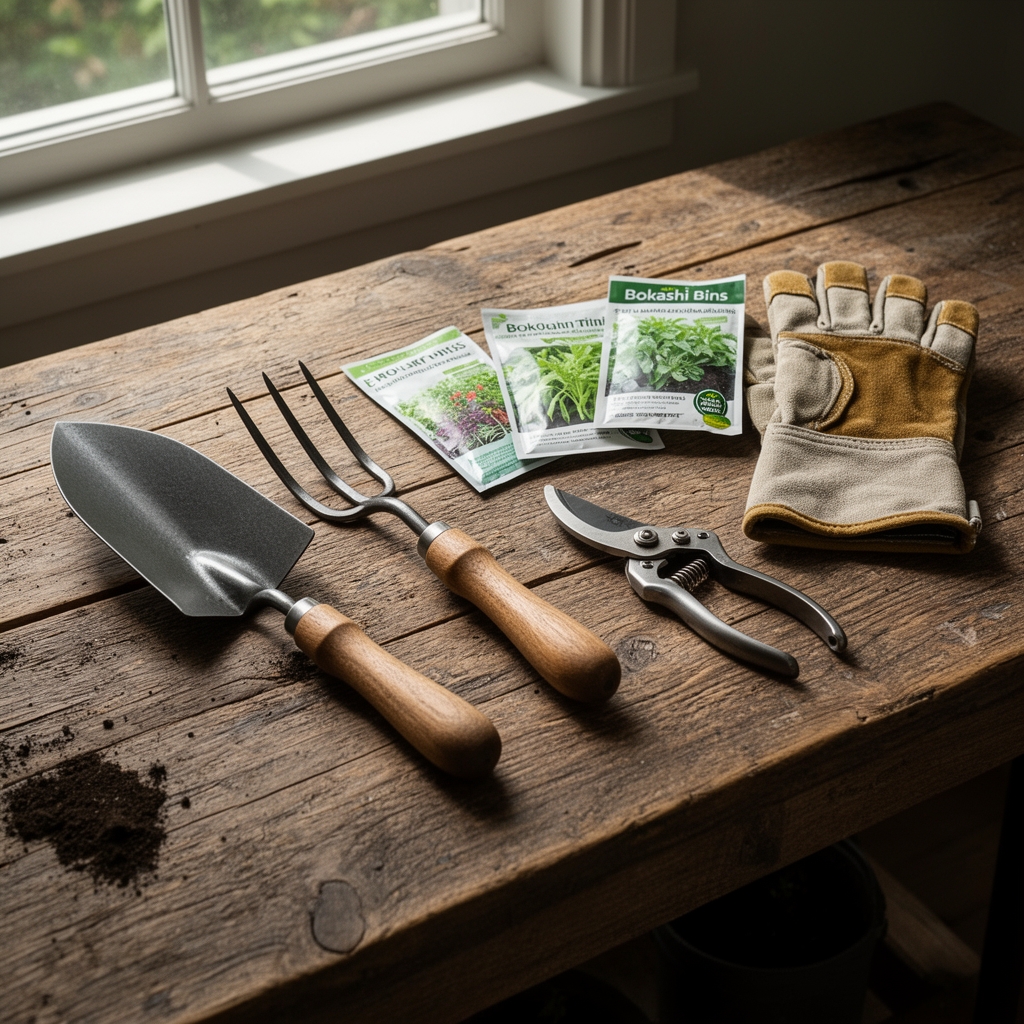
A complete bokashi system requires specific components rated for anaerobic fermentation. The bin itself must be airtight with a drainage spigot positioned 2 inches above the base. Food-grade polypropylene buckets rated to 5 gallons work best.
The inoculant contains effective microorganisms (EM) cultured on wheat bran or rice hulls. Quality bokashi bran delivers 1×10^6 colony-forming units per gram. This concentration ensures complete fermentation. The finished product, once buried, mineralizes to approximate NPK ratios of 1-1-1, with enhanced cation exchange capacity from humic acid formation.
Additional materials include:
- Ceramic plate or disk to compress layers and exclude air pockets
- Collection container for bokashi tea (leachate with pH 3.0-4.0)
- Carbon-rich bedding material for burial trenches
- pH test strips to monitor fermentation progress
Standard bins measure 10-12 inches in diameter and 14-16 inches tall. Two-bin rotation systems prevent processing gaps.
Timing
Bokashi fermentation operates independently of hardiness zones because it occurs indoors at ambient temperatures between 60-75°F. Colder temperatures below 55°F slow microbial activity by 40-60 percent. Temperatures above 80°F encourage putrefaction rather than fermentation.
The two-week fermentation window determines burial timing. In zones 7-10, soil burial can occur year-round when ground temperatures exceed 45°F. Zones 3-6 require spring burial after the final frost date when soil temperatures reach 50°F at 6-inch depth. This ensures active soil biology to process the fermented material.
Fall fermentation in cold climates requires storage until spring thaw. Sealed fermented bokashi remains stable for 4-6 weeks at 35-40°F.
Phases

Starting Phase
Layer kitchen scraps in 2-inch increments inside the bin. Add 2 tablespoons of bokashi bran per layer, distributing evenly across the surface. Press firmly with the ceramic plate to eliminate air pockets and create anaerobic conditions. Exclude large bones, which require 3-4 months to ferment completely.
Accepted materials include vegetable scraps, fruit waste, cooked grains, coffee grounds, eggshells, small amounts of meat, dairy products, and bread. Liquid content should not exceed 70 percent by volume. Drain excess liquid through the spigot every 2-3 days.
Pro-Tip: Chop scraps to 1-inch pieces or smaller. Increased surface area accelerates fermentation by 30-40 percent and reduces particle size for faster soil incorporation.
Fermentation Phase
Seal the bin after each addition. White mold (beneficial yeast) indicates proper fermentation. The pH should drop to 3.5-4.0 within 5-7 days. This acidic environment suppresses pathogenic bacteria while preserving nutrient content.
Temperature inside the bin remains near ambient. No thermophilic phase occurs, distinguishing bokashi from hot composting. This preserves 90-95 percent of nitrogen content compared to 40-60 percent in aerobic compost.
Drain bokashi tea every 48-72 hours. Undiluted tea contains organic acids at pH 3.0 and should be diluted 1:100 for use as a soil drench or 1:200 for foliar application.
Pro-Tip: Inoculate drainage tea with mycorrhizal fungi spores (50 spores per milliliter) before application. The acidic environment suspends spore germination until soil contact, enhancing colonization rates by 25 percent.
Burial Phase
After 14 days of fermentation, bury the contents in soil trenches 8-12 inches deep. Mix with equal parts carbon material: shredded leaves, straw, or sawdust with C:N ratios of 30:1 or higher. Cover completely with 4 inches of soil.
Soil microorganisms break down the pickled material within 3-4 weeks in active growing season, 6-8 weeks in cool weather. Plant roots should not contact fresh bokashi. Maintain a 6-inch buffer zone for transplants, 8-10 inches for direct seeding.
The fermented material initially depresses soil pH by 0.5-1.0 units within the burial zone. This effect neutralizes as decomposition progresses and organic acids mineralize.
Pro-Tip: Add rock phosphate at 1 cup per 5 gallons of fermented bokashi during burial. Low pH enhances phosphate solubility, increasing plant-available phosphorus by 40-70 percent compared to neutral pH applications.
Troubleshooting
Symptom: Putrid odor, black or blue-green mold
Solution: pH exceeded 5.0 due to insufficient bran or air exposure. Discard batch. Increase bran application to 3 tablespoons per layer and verify airtight seal.
Symptom: No fermentation activity, no smell after 7 days
Solution: EM culture is dead or inactive. Temperature may be below 55°F. Move bin to warmer location. Replace bran with fresh inoculant containing active cultures.
Symptom: Excessive liquid accumulation, soggy texture
Solution: High moisture content materials dominate. Balance with dry materials: bread, coffee grounds, shredded paper at 20-30 percent by volume. Drain liquid daily.
Symptom: Fruit flies or fungus gnats around bin
Solution: Seal is compromised. Check gasket and lid fit. Bury food scraps under 1 inch of previous bokashi layer to eliminate odor signals attracting insects.
Symptom: White coating on contents
Solution: This indicates successful fermentation. Yeast colonies form protective biofilms. This is the desired outcome, not a problem.
Maintenance
Rinse bins with water after emptying. Avoid soap, which leaves residues inhibiting EM cultures. Sun-dry for 4-6 hours to eliminate anaerobic odors.
Drain bokashi tea every 2-3 days maximum. Accumulated tea turns septic after 72 hours, producing hydrogen sulfide. Use tea within 24 hours of collection. Dilute 1:100 and apply 1 pint per square yard of garden bed monthly during growing season.
Refresh bokashi bran every 6 months. Store in airtight containers at 40-70°F. Exposure to moisture or heat above 85°F kills cultures within 2-3 weeks.
Clean the drainage spigot monthly with a vinegar solution (5 percent acetic acid) to prevent mineral buildup and biofilm blockages.
FAQ
How long does bokashi fermentation take?
Fermentation requires 14 days at 65-75°F. Cold temperatures extend this to 21-28 days. Material is ready when pH reaches 3.5-4.0 and develops a sweet-sour pickle smell.
Can I add citrus and onions to bokashi bins?
Yes. Anaerobic fermentation processes these materials effectively. The acidic environment complements citrus pH. Onions ferment completely within the standard timeframe without inhibiting EM cultures.
What is the NPK value of bokashi compost?
Pre-burial fermented bokashi contains minimal available nutrients. After 4 weeks of soil decomposition, mineralization yields approximately 1-1-1 NPK with enhanced humic content and improved cation exchange capacity of 40-60 meq/100g.
How much bokashi can I bury in a garden bed?
Apply 2-3 gallons per 10 square feet annually. Excessive application creates anaerobic pockets and temporarily immobilizes nitrogen. Space burial trenches 18-24 inches apart to allow aerobic zones between amendments.
Is bokashi tea a fertilizer?
No. Bokashi tea is a microbial inoculant with trace nutrients. It contains organic acids and beneficial bacteria that improve nutrient cycling but does not replace NPK fertilization programs. Use as a supplement to complete fertility plans.