9 Sizing Steps for Repotting a Rubber Tree
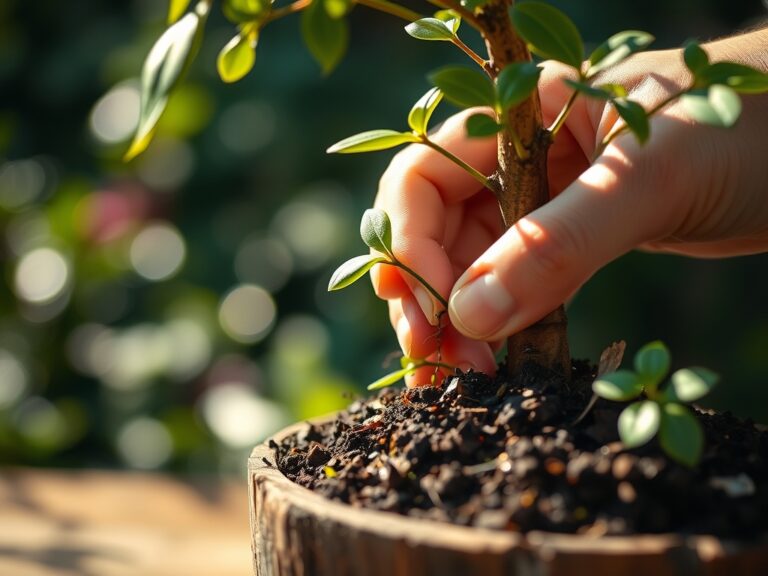
The weight of a rubber tree root ball splitting its nursery pot sends a clear signal. Roots coil against plastic walls, moisture drains in seconds, and new growth stalls despite ideal light conditions. These symptoms demand immediate action. The steps for repotting a rubber tree begin with assessing root density through drainage holes and end with a plant anchored in fresh substrate, ready to expand for another 18 to 24 months.
Ficus elastica evolved in the understory forests of Southeast Asia, where seasonal monsoons deposit organic matter over lateritic soils. The species thrives when repotting mimics this cycle of renewal.
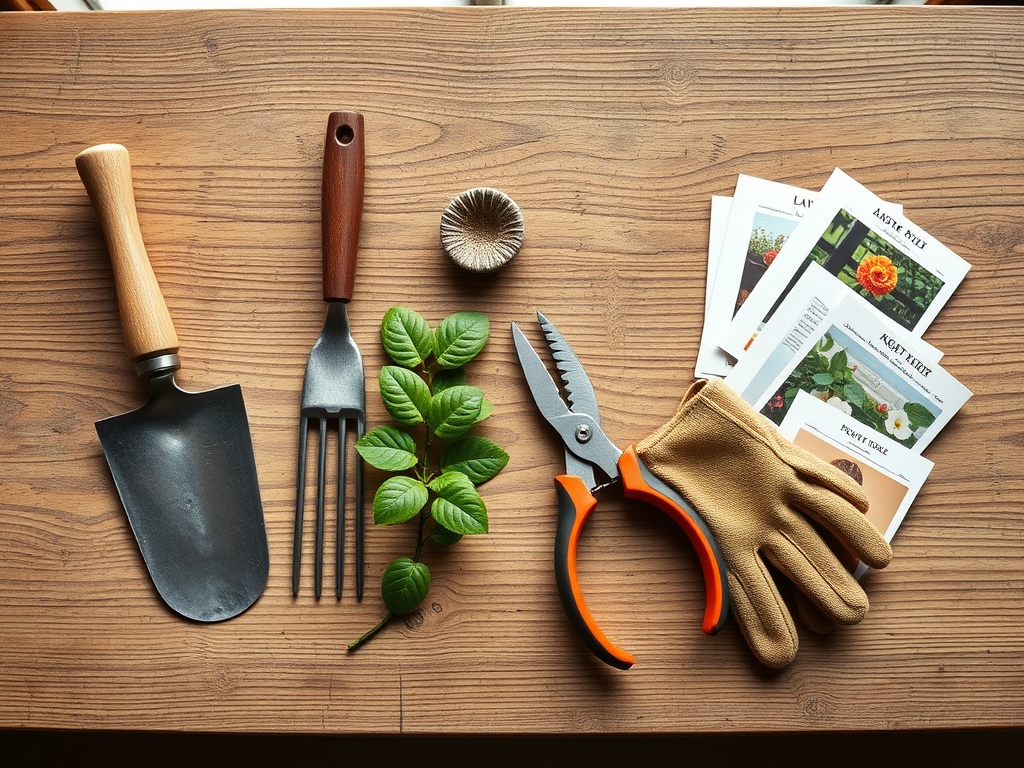
Materials
Select a container 2 inches larger in diameter than the current pot. Terracotta improves gas exchange but requires more frequent watering. Plastic retains moisture longer and suits climates with low humidity.
Prepare a soil blend with pH 6.0 to 7.0. Combine 40% peat moss or coir, 30% pine bark fines, 20% perlite, and 10% worm castings. This ratio achieves a cation exchange capacity near 15 meq/100g, sufficient for nutrient retention without waterlogging.
Incorporate a slow-release fertilizer rated 4-4-4 or 5-5-5. Organic meals derived from feather, bone, and kelp supply nitrogen for foliage, phosphorus for root development, and potassium for cellular function. Avoid high-nitrogen formulas above 10-5-5 during repotting. Excess nitrogen stimulates shoot growth before roots establish, increasing transplant shock.
Add mycorrhizal inoculant at 1 teaspoon per gallon of soil. Glomus intraradices and Rhizophagus irregularis colonize root cortex cells, extending hyphal networks that increase phosphorus uptake by 300%.
Sterilize pruning shears with 70% isopropyl alcohol. Prepare a watering can with dechlorinated water at room temperature.
Timing
In USDA Hardiness Zones 10 and 11, repot rubber trees year-round, avoiding only the hottest weeks above 95°F. In Zones 8 and 9, schedule repotting between March 15 and May 30, after the last average frost date. Indoor specimens follow the same spring window when natural auxin distribution peaks and new leaf primordia emerge from apical meristems.
Repot juvenile plants annually. Mature specimens over 4 feet tall require repotting every 24 to 36 months. Monitor root emergence from drainage holes as the primary indicator, not calendar intervals.
Phases

Preparation Phase
Water the plant 24 hours before repotting. Moist soil adheres to roots, protecting fine root hairs during extraction. Lay a tarp over the work surface.
Invert the pot and tap the rim against a table edge. Slide the root ball free. If roots bind to container walls, run a clean knife along the interior perimeter.
Pro-Tip: Score vertical lines 1/4 inch deep along four sides of the root ball using sterilized shears. This technique severs circling roots and stimulates lateral branching within 14 days.
Transplanting Phase
Inspect roots for brown, mushy sections indicating Pythium or Phytophthora rot. Prune damaged tissue back to white, firm growth. Remove the outer 1 inch of potting mix from the top of the root ball. This layer accumulates soluble salts that inhibit feeder root development.
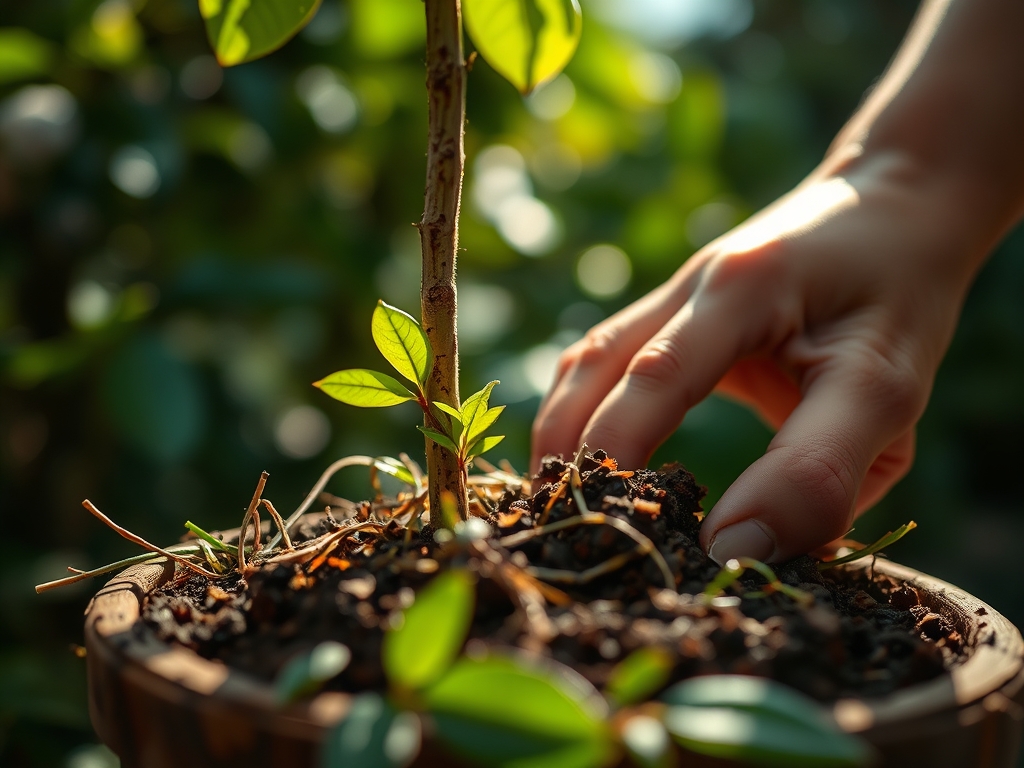
Fill the new container with 2 inches of prepared soil. Center the root ball so the crown sits 1/2 inch below the pot rim. Fill gaps with soil mix, tamping gently to eliminate air pockets without compacting. Air pockets create desiccation zones where roots desiccate.
Pro-Tip: Orient the plant's fullest side toward lower light. Auxin redistribution will encourage growth on the sparse side, balancing the canopy over 8 weeks.
Establishing Phase
Water until liquid drains from the bottom. Discard runoff to prevent salt reabsorption. Place the plant in indirect light with intensity between 200 and 400 foot-candles for 7 days. Avoid fertilizer for 4 weeks. Transplanted roots require time to repair membrane damage before nutrient uptake resumes.
Monitor for wilting in the first 72 hours. Leaf turgor depends on root hydraulic conductivity, which drops 40% immediately after disturbance.
Pro-Tip: Mist leaves twice daily for the first week if indoor humidity falls below 40%. Stomatal closure during establishment reduces transpiration stress.
Troubleshooting
Symptom: Yellow leaves with green veins appearing 10 days post-repotting.
Solution: Chlorosis indicates iron deficiency from pH above 7.2. Apply chelated iron at 1 tablespoon per gallon of water. Test soil pH and amend with sulfur if needed.
Symptom: Leaf drop concentrated on lower branches.
Solution: Ethylene gas production from anaerobic root zones signals overwatering. Reduce irrigation frequency by 50%. Ensure drainage holes remain unobstructed.
Symptom: White cottony masses on stems.
Solution: Mealybugs (Pseudococcidae) colonize stressed plants. Dab insects with 70% isopropyl alcohol on cotton swabs. Spray neem oil at 2 tablespoons per gallon weekly for 3 applications.
Symptom: Brown leaf margins with crisp texture.
Solution: Salt burn from over-fertilization or chlorinated water. Flush soil with distilled water equal to twice the pot volume. Let water run through for 5 minutes to leach salts.
Maintenance
Provide 1 inch of water per week, adjusting for container size and ambient humidity. Allow the top 2 inches of soil to dry between waterings. Insert a moisture meter to 4 inches depth. Irrigate when readings drop to 4 on a 1-to-10 scale.
Resume fertilization 4 weeks after repotting. Apply liquid fertilizer at 10-10-10 diluted to half strength every 14 days from April through September. Suspend feeding from October through March when growth slows.
Prune only to remove damaged foliage. Ficus elastica produces latex sap containing hevein proteins. Wear gloves and wash tools immediately to prevent skin irritation.
FAQ
How often do rubber trees need repotting?
Juvenile plants require annual repotting. Mature specimens over 4 feet tall thrive with repotting every 24 to 36 months.
Can I reuse old potting soil?
No. Spent substrate loses structure and harbors pathogens. Compost used soil and start with fresh mix.
Should I remove all old soil from roots?
Remove only the outer 1 inch and loose material. Preserving the central root ball minimizes transplant shock.
What size pot is best?
Choose a container 2 inches larger in diameter. Oversized pots retain excess moisture, promoting root rot.
Why are leaves drooping after repotting?
Temporary wilting occurs as roots repair damage. Maintain consistent moisture and avoid direct sun for 7 days.