7 Best Digital Plant Moisture Meters for Soil Checks
Dry soil pulls moisture from plant roots faster than most gardeners realize, creating wilting and nutrient lockout before visible symptoms appear. The best plant moisture meters prevent this hidden stress by measuring volumetric water content at the root zone, where electrical conductivity or capacitance sensors detect moisture levels between 0% and 100% saturation. These digital tools eliminate guesswork, translating soil dampness into actionable data that optimizes irrigation schedules and prevents both drought stress and anaerobic conditions caused by overwatering.
Materials
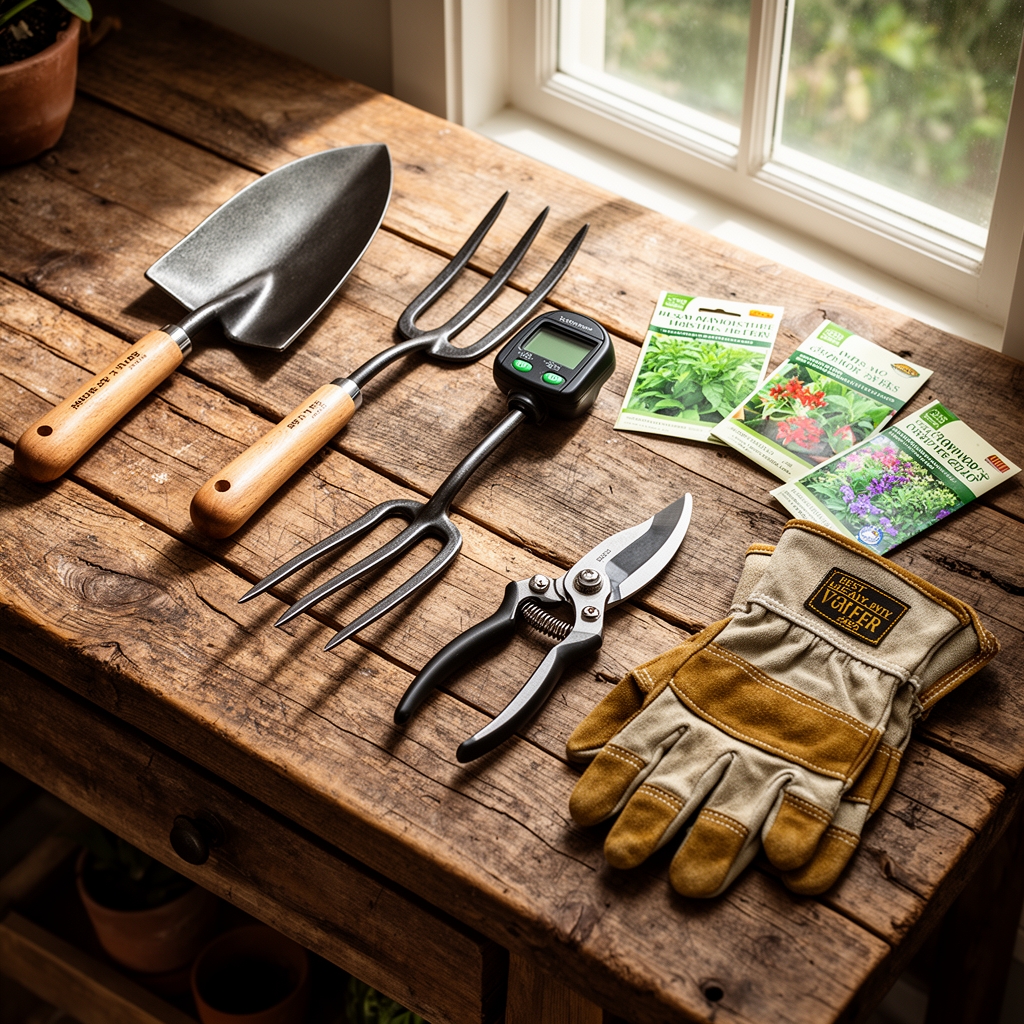
Digital moisture meters fall into three categories based on sensor technology and supplementary measurements. Capacitance-based models detect dielectric permittivity changes in soil, offering corrosion-resistant probes ideal for long-term installation in greenhouse beds or raised planters. Resistance meters measure electrical conductivity between two electrodes, performing best in mineral soils with moderate cation exchange capacity (CEC) of 10-25 meq/100g. Hybrid units combine moisture sensing with pH and NPK analysis, though they sacrifice depth penetration for multi-functionality.
Select meters with probe lengths matching your container depth. Standard 6-inch probes suit nursery pots up to 2 gallons, while 12-inch models reach the root zone of 15-gallon fabric pots and in-ground plantings. Stainless steel electrodes resist corrosion in acidic soils (pH 4.5-5.5), critical for ericaceous plants like blueberries requiring sulfur amendments and aluminum sulfate. For alkaline desert soils with calcium carbonate deposits, anodized aluminum probes prevent mineral buildup that skews readings.
Calibration standards matter. Professional-grade meters ship with reference solutions at 10%, 50%, and 80% moisture by volume, corresponding to permanent wilting point, field capacity, and saturation respectively. Budget models lack calibration but compensate with user-adjustable scales for sandy, loamy, or clay textures. Organic matter complicates readings. Peat-based potting mixes with 5-5-5 controlled-release fertilizer retain 40-60% moisture at field capacity, while mineral field soil peaks at 25-35%.
Timing
Deploy moisture meters when seasonal water demand shifts. In USDA Hardiness Zones 3-6, begin monitoring two weeks before the last spring frost date (April 15-May 30), when root systems activate and transpiration accelerates. Northern gardeners face snowmelt saturation followed by rapid drying as soil temperatures reach 50°F, creating a narrow window for bare-root transplanting before heat stress begins.
Zones 7-9 require year-round monitoring, with peak importance during summer months (July-August) when evapotranspiration rates exceed 0.25 inches per day. Desert regions in Zones 9-11 demand twice-daily checks during 100°F+ heat waves, as container substrates lose 30-40% moisture volume in six-hour intervals under direct sun exposure.
Fall monitoring (September-October) guides winter dormancy prep. Cease supplemental irrigation when soil temperatures drop below 40°F to prevent frost heaving, but maintain 15-20% moisture to protect overwintering root crowns from desiccation. Mulch layers of 3-4 inches insulate the root zone while meters confirm adequate moisture reserves before ground freeze.
Phases

Sowing: Insert the probe to half the pot depth, targeting 70-80% moisture for seed germination. Brassicas and lettuce require consistent 75% saturation in the top 2 inches, while deep-rooted carrots tolerate 50-60% surface moisture once taproots extend past 4 inches. Temperature compensated meters adjust for substrate warmth, essential when heat mats raise root-zone temps to 75-80°F for Solanaceae germination.
Pro-Tip: Water propagation trays from below using capillary matting rather than overhead misting. This maintains the 3-4 inch substrate layer at 65-75% moisture without surface crusting that blocks oxygen diffusion to emerging radicles.
Transplanting: Reduce moisture to 50-60% for 48 hours before transplanting. This mild water stress triggers increased auxin production in root tips, promoting lateral root proliferation upon transplant. Post-transplant, maintain 60-70% moisture for seven days to support mycorrhizal fungi colonization, which increases water uptake efficiency by 30-40% through hyphal networks extending beyond root hairs.
Pro-Tip: Inoculate transplant holes with 1 tablespoon of endomycorrhizal spores mixed into backfill soil. Maintain 65% moisture while fungal networks establish, verified by white hyphal threads visible around feeder roots within 14 days.
Establishing: Taper to 40-50% moisture once new vegetative growth appears, typically 10-14 days post-transplant. This "dry-down cycle" forces roots to explore deeper soil layers, increasing drought tolerance. Monitor the bottom third of the root zone. When readings drop to 35%, irrigate to 55% capacity. This cycle mimics natural precipitation patterns, strengthening vascular tissue and preventing shallow root matting.
Pro-Tip: Install probes at 45-degree angles to intersect vertical and horizontal root distribution. Compare readings from three depths (upper, middle, lower third) to map moisture gradients and identify compaction layers or hydrophobic zones.
Troubleshooting
Symptom: Meter reads 70%+ but plants exhibit wilting and leaf curl.
Solution: Test for root rot caused by Pythium or Phytophthora. Oversaturated anaerobic conditions destroy fine root hairs responsible for moisture uptake despite abundant soil water. Remove affected plants, reduce irrigation to 40-50%, and incorporate perlite at 25% volume to improve drainage and oxygen diffusion.
Symptom: Inconsistent readings between multiple probes in same container.
Solution: Soil stratification. Dense clay layers or hydrophobic peat pockets create moisture barriers. Core-aerate to 8 inches depth, working in 1 inch of coarse sand and aged compost to homogenize texture. Retest after 72 hours of settling.
Symptom: Rapid moisture loss (70% to 30% in 24 hours).
Solution: Root-bound conditions. Circling roots create air gaps along container walls where probes contact dry voids rather than root-zone substrate. Transplant to containers 4 inches larger in diameter, or score root balls vertically at 1-inch intervals before replanting.
Symptom: Probe corrosion or mineral crust on electrodes after two weeks.
Solution: High soluble salt accumulation from synthetic fertilizers. Flush substrate with 2-3 times container volume of pH-balanced water to reduce EC below 1.5 mS/cm. Switch to organic 4-4-4 blends releasing nutrients through microbial activity rather than salt-based dissolution.
Maintenance
Irrigate when moisture levels reach 40% in the active root zone, applying water until runoff appears and moisture rebounds to 60-65%. This prevents leaching of nitrate and potassium beyond root access while maintaining adequate oxygen in the pore space. Container plants in terra cotta require 1.5 times the volume of plastic pots due to sidewall evaporation.
Clean probes monthly with white vinegar diluted 1:3 with distilled water, removing mineral deposits that insulate electrodes and cause false readings. Rinse with isopropyl alcohol and air-dry before reinsertion. Replace probes showing pitting, oxidation, or bent electrodes, as damaged sensors report 10-15% higher moisture than actual values.
Recalibrate every 90 days using reference standards or the gravimetric method: weigh saturated substrate, dry at 220°F for 24 hours, reweigh, then calculate moisture percentage as (wet weight minus dry weight) divided by dry weight times 100.
FAQ
How deep should I insert the probe?
Insert to two-thirds of the root-zone depth. For 8-inch pots, aim for 5-6 inches. Shallow readings reflect surface evaporation rather than root-accessible moisture.
Do meters work in hydroponic systems?
No. Capacitance sensors require particulate matter. Use EC meters measuring nutrient solution conductivity in millisiemens for hydroponic moisture management.
Can one meter serve multiple plants?
Yes, but clean the probe between insertions to prevent pathogen transmission. Sterilize with 70% isopropyl alcohol for 30 seconds between plants.
What moisture percentage triggers watering?
40-45% for established perennials, 50-55% for annuals and vegetables, 60-65% for moisture-demanding tropicals. Species-specific wilting points vary by stomatal density and cuticle thickness.
Do temperature extremes affect accuracy?
Soil below 40°F or above 95°F reduces sensor accuracy by 5-10%. Temperature-compensated models adjust automatically within this range.